Robot Work Coloring Book: A Strategic Asset for Creative Entrepreneurs and Content Publishers
If you are building a publishing business on Amazon KDP, creating POD products, or expanding your digital product catalog, you already know that the difference between a passive income stream and a wasted effort often comes down to one thing: intentionality. The Robot Work Coloring Book is a digital printable collection of 45 robot-themed coloring pages designed for both adults and kids, but its strategic value goes far beyond simple entertainment. When approached thoughtfully, this type of product can serve multiple business goals, from brand positioning to audience engagement, and from operational efficiency to long-term revenue stability.
This article walks through what the Robot Work Coloring Book actually offers, why it matters from a strategic perspective, and how to decide whether—and how—to use it for your specific goals.
Understanding the Product: What You Actually Receive
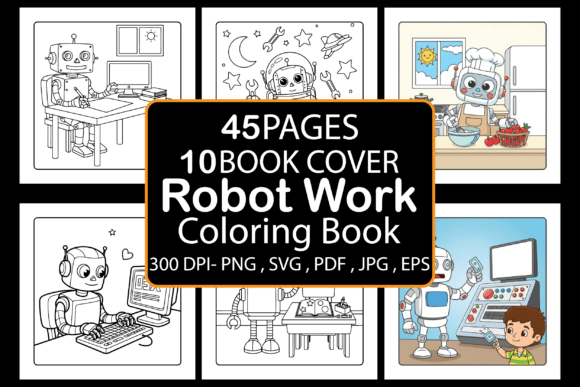
Before evaluating any digital asset, you need a clear picture of what it contains. The Robot Work Coloring Book is a comprehensive package built for immediate deployment. The interior includes 45 unique robot work illustrations, formatted at 8.5 x 8.5 inches with bleed, in black and white. You receive one final PDF file ready for KDP upload, plus 45 individual files in JPG, PNG, EPS, and SVG formats. Additionally, the package includes 10 book cover backgrounds to help you design a professional cover without starting from scratch.
This is not a single-use asset. The multiple file formats mean you can repurpose the illustrations across different platforms and product types. The PDF is ready for Amazon KDP, but the SVG and EPS files allow you to modify, resize, or adapt the artwork for other projects such as printable bundles, activity books, or even merchandise. The cover backgrounds reduce design friction, which matters when speed to market is part of your strategy.
Why a Robot Work Theme Matters for Your Audience
The theme of robots working is not arbitrary. It taps into a specific cultural and psychological space. Robots represent precision, automation, futuristic thinking, and the intersection of human creativity with mechanical reliability. For adults, coloring a robot engaged in work can be both calming and mentally stimulating. It offers a break from abstract or overly whimsical coloring themes while still providing stress relief.
For children, robot imagery sparks curiosity about technology, engineering, and problem-solving. The "work" aspect introduces concepts of purpose and productivity in a playful way. This dual appeal—adults seeking mindfulness and kids exploring imaginative play—broadens your market without diluting your message. A well-positioned Robot Work Coloring Book can attract parents, educators, hobbyists, and even corporate buyers looking for unique team-building or wellness materials.
Strategic Use Cases for Entrepreneurs and Publishers
If you are building a KDP catalog or selling POD products on platforms like Amazon, Etsy, or Gumroad, a single product rarely stands alone. The Robot Work Coloring Book fits into several strategic categories depending on your goals.
Building a Niche Catalog Around STEM and Creativity
One of the most effective long-term strategies is to create a series of themed coloring books that reinforce a coherent brand. A robot work theme aligns well with STEM education, creative problem-solving, and futuristic thinking. If you already sell children’s activity books, educational printables, or mindfulness coloring collections for adults, this product can serve as a bridge between those categories. It allows you to test whether your audience responds to a technology-adjacent theme before investing in a full STEM workbook series.
From a planning perspective, the 45-page count is substantial enough to position as a standalone book but modular enough to split into smaller bundles if you want to create a pricing ladder. You could offer the full collection as a premium product and a sample of 10 pages as a lead magnet or low-cost entry point.
Positioning for Both Adults and Kids Without Confusion
A common challenge in product positioning is that coloring books designed for children often fail to appeal to adults, and vice versa. The robot work theme offers a rare middle ground. The illustrations can be detailed enough for adult coloring enthusiasts who enjoy intricate line work, yet clear and engaging enough for children. Your marketing materials can emphasize this versatility by showing both use cases. For example, educators might use the pages as classroom activities, while adults might use them for relaxation during a lunch break.
This dual positioning reduces the risk of alienating either segment. However, it also requires careful copywriting. Avoid phrases that pigeonhole the product into one age group. Instead, describe the illustrations as "suitable for all ages" or "designed to engage curious minds from 8 to 80."
Leveraging Multiple File Formats for Product Expansion
The inclusion of JPG, PNG, EPS, and SVG files transforms this from a single product into a content library. You can use the EPS and SVG files to create custom variations, combine elements, or produce additional products like wall art, stickers, or digital scrapbooking elements. The PNG files with transparent backgrounds are especially useful for creating mockups, social media graphics, or promotional materials.
If you are running a POD business beyond books—such as print-on-demand apparel or home decor—the robot work illustrations can be adapted for those products as well. A single robot image on a t-shirt or coffee mug extends your product line without requiring new illustration work. This operational efficiency is one of the highest-leverage uses of any digital asset.
Practical Implementation: From Download to Market
Having a high-quality asset is only the first step. How you implement it determines whether it generates consistent results or becomes another unused file in your folder.
Preparing the Interior for KDP Upload
The final PDF file is described as ready-to-upload, but you should still perform basic quality checks before publishing. Open the PDF and verify that the bleed margins are correct, the pages are in order, and the black-and-white line art maintains consistent quality. Print a test page if possible to ensure the lines are thick enough to color without bleeding through typical paper. For KDP, also check that the file size complies with Amazon’s upload limits and that the page count matches your description.
If you are using the cover backgrounds, combine them with the interior theme to create a cohesive product. A cover that clearly shows a robot working will set accurate expectations and reduce returns or negative reviews. Avoid generic cover designs that could apply to any coloring book—leverage the specific imagery to differentiate your listing.
Pricing Strategy and Positioning
The Robot Work Coloring Book contains 45 pages, which is a reasonable length for a KDP coloring book priced between $5.99 and $8.99 for print, depending on your costs and market positioning. For digital downloads, consider pricing between $3.99 and $6.99, or use it as a freebie to build your email list. If you are bundling multiple coloring books together, the robot work theme adds variety and depth to a collection.
When deciding on price, think about the perceived value. A robot work theme with detailed illustrations can justify a slightly higher price point than a generic collection. Your product description should mention the variety of robots, the quality of line art, and the versatility for different age groups. Avoid underselling the product—low prices can sometimes signal low quality, especially in the coloring book category.
Using the Product as a Content Engine for Marketing
The 45 individual illustrations are not just for the book itself. You can use a selection of them as social media content, blog post visuals, or email attachments. Post a few pages on Pinterest or Instagram with a call to action linking to your full product. Create a short timelapse video of someone coloring one of the robot pages and share it on TikTok or YouTube Shorts. These micro-contents serve as proof of quality and build trust with potential buyers.
Because the illustrations are black and white, they work well as downloadable freebies. Offer one or two pages as a lead magnet in exchange for an email address. This strategy not only grows your audience but also gives subscribers a sample of the full product, increasing the likelihood of a future purchase.
Risks of Using the Robot Work Coloring Book Without Clear Goals
Any product can underperform if it is deployed without a clear purpose. The Robot Work Coloring Book is no exception. There are a few specific risks to consider.
Market Saturation in the Coloring Book Category
Coloring books are a popular category on Amazon KDP and other platforms. Without a distinct angle, your product may get lost among thousands of similar listings. The robot work theme helps differentiate you, but only if you communicate that differentiation clearly. If you treat it as just another coloring book and publish with generic keywords and a basic cover, the odds of strong organic sales drop significantly.
To mitigate this risk, invest time in keyword research specific to robot and STEM-themed coloring books. Look for search terms with moderate volume and lower competition. Also, consider the seasonality of the theme—robot work may perform well around back-to-school periods, STEM awareness months, or holiday gift seasons when parents seek educational gifts.
Audience Mismatch If Positioning Is Unclear
Because the product appeals to both adults and kids, there is a risk of pleasing neither if the positioning is muddy. A parent looking for a simple children’s activity might find the illustrations too detailed. An adult seeking intricate mandalas might find the robot theme too playful. The solution is to segment your marketing. Create separate listings or separate product variations if necessary, or at minimum use your product description to explain exactly who the book is for and what they can expect.
Consider including a page inside the book that says "For [adults/kids]" to set expectations. If you are targeting adults, emphasize stress relief and creative focus. If targeting children, highlight educational value and fine motor skill development. Doing both is possible, but requires careful messaging.
Underutilizing the File Formats
Receiving 45 JPG, PNG, EPS, and SVG files is a significant asset, but only if you actually use them. If you upload only the PDF to KDP and ignore the other formats, you are leaving value on the table. The SVG files, in particular, are valuable for scaling, editing colors, or combining with other design elements. Without a plan for these files, you are essentially paying for a premium package and using only the basic component.
Set aside time—even an hour—to explore how you might repurpose the illustrations. Create a simple social media template using one robot image, or design a small sticker sheet for a bonus product. The more you extract from the asset, the higher your return on investment.
Long-Term Value and Scalability Considerations
When evaluating any digital product for your business, think beyond the first sale. The Robot Work Coloring Book can become a foundation for a series. Once you see which robot illustrations resonate most with your audience, you can commission or create additional volumes with similar themes—robot construction, robot exploration, robot teamwork. Each volume reinforces your niche and builds a loyal following.
The black-and-white line art style also ages well. Unlike trendy designs that feel dated after a season, robot imagery remains relevant across years. This gives your product a longer shelf life and reduces the pressure to constantly create new content. One well-made product can generate passive income for several years if it is properly optimized and maintained.
Additionally, the 10 cover backgrounds included in the package reduce the friction of creating a professional cover. For new publishers, this is especially valuable. A poor cover is one of the most common reasons a KDP product fails to gain traction. Having pre-designed backgrounds that match the interior theme gives you a strong starting point. You can add typography, adjust colors, and finalize a cover that looks cohesive without hiring a designer.
Decision-Making Guidance: Is This Product Right for Your Goals?
Before purchasing or publishing the Robot Work Coloring Book, ask yourself a few strategic questions.
First, what is your primary goal? If you are testing the KDP marketplace with a low-investment product, this is a solid choice because it includes everything you need to publish. If you are expanding an existing coloring book catalog, the robot work theme offers a distinct angle that can attract a new segment. If you are building an email list or social media following, the individual illustrations give you ample content for freebies and posts.
Second, how much time can you dedicate to marketing? A high-quality product alone does not guarantee sales. You will need to create a listing, optimize keywords, design a cover, and promote the book. If you have limited time, focus on getting the cover and description right first, then run a small test to gauge demand.
Third, consider your audience’s preferences. If your existing customers lean toward fantasy or nature themes, a robot work collection may be a departure. That does not mean it will fail, but you may need to introduce it gradually and cross-promote it to new followers who have shown interest in technology or STEM content.
Finally, think about the format versatility. If you sell on multiple platforms—Amazon, Etsy, Gumroad, Teacher Pay Teachers—the SVG and EPS files give you freedom to adapt the illustrations. If you only sell on Amazon, the PDF is sufficient, but you lose the opportunity to monetize the artwork elsewhere. Maximizing the asset means using it in more than one context.
Practical Examples of Strategic Use
Imagine you are a KDP publisher who focuses on children’s activity books. You currently have a series of animal coloring books and maze puzzles. Adding the Robot Work Coloring Book gives you a new category without requiring new illustration work. You can bundle it with an existing STEM puzzle book to create a "Future Innovators" combo. Your product description can highlight how the robot work theme complements learning about machines, tools, and jobs.
Alternatively, suppose you are a blogger or educator who sells printables. You could offer the full PDF as a paid resource on your site, and use the individual PNG files to create a "Color the Robot" series on your blog. Each week, you post a new robot image, share a short fact about robots, and link to the full collection. This builds anticipation and gives readers a reason to return.
For a small business owner or freelancer who sells on Etsy, the SVG files allow you to create customizable robot coloring pages. You could offer a "Design Your Own Robot" bundle where buyers receive the base illustrations and can add their own elements. This personalization aspect increases perceived value and justifies a higher price.
Final Thoughts on Intentional Use
The Robot Work Coloring Book is more than a collection of 45 cute or detailed robot drawings. It is a strategic asset that can support multiple business goals—product diversification, audience building, content creation, and operational efficiency. But like any tool, its value depends on how intentionally you use it. Going in with a clear plan, understanding your audience, and leveraging the full range of file formats will determine whether this product becomes a reliable revenue stream or just another listing in a crowded marketplace.
Take the time to align the product with your broader goals. Test one use case first, gather feedback, and then expand. The robot work theme has staying power because it appeals to curiosity about the future and the timeless human desire to create. Use that to your advantage, and you will build something that works not just for your customers, but for your business over the long term.