Animal in Jar Coloring Book: A Practical Tool for Creative Workflows and Product Development
If you have spent any time exploring the self-publishing space or digital product marketplaces, you have likely come across the Animal in Jar Coloring Book as a recurring theme. This is not just a collection of cute illustrations. It is a structured asset that fits into multiple real-world workflows, from content creation and product design to relaxation routines and business scaling. Understanding what this resource actually is, how it can be used before, during, and after different projects, and how it integrates with other tools and platforms will help you make the most of it whether you are a creator, entrepreneur, educator, or simply someone looking for a practical creative outlet.
What the Animal in Jar Coloring Book Actually Contains
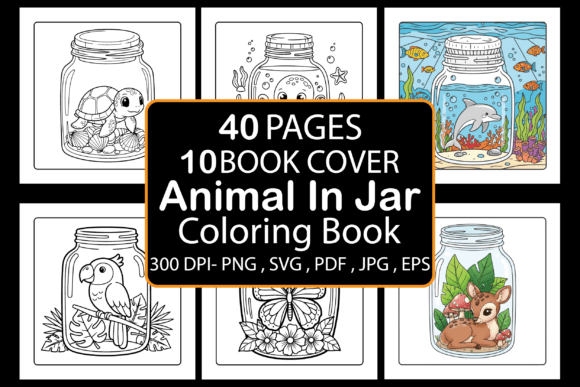
At its core, this is a digital printable collection of 40 unique animal-in-jar illustrations. Each design presents a small creature enclosed within a jar, offering a blend of whimsy and detail that appeals to both adults and children. The package includes a ready-to-upload PDF formatted at 8.5 x 8.5 inches with bleed, along with individual JPG, PNG, EPS, and SVG files for each page. You also receive ten book cover backgrounds to assist with cover design. The black-and-white line art is intentionally designed for coloring, but the file formats provided make it much more than a simple coloring book.
The inclusion of EPS and SVG files means the illustrations are vector-based and fully scalable. This is a significant detail for anyone working in product development, print-on-demand, or KDP interior creation. You are not locked into a single use case. The same illustration can be resized for a book page, a poster, a sticker, a fabric print, or a digital background. The PNG files with transparent backgrounds further extend the utility into graphic design and social media content creation.
Where This Fits in a Creative or Business Workflow
The value of a resource like the Animal in Jar Coloring Book becomes clear when you map it against the stages of a typical project. Whether you are launching a product on Amazon KDP, building a portfolio of POD items, or planning a series of therapeutic coloring sessions, this asset plays a role at multiple points.
Before a Project: Planning and Asset Preparation
If you are a self-publisher on Amazon KDP, the first hurdle is always content creation. Commissioning original illustrations can be expensive and time-consuming. Having a set of 40 pre-drawn, high-quality animal-in-jar designs removes that bottleneck before you even begin. You can spend your upfront time instead on market research, keyword planning, and cover design. The ten included cover backgrounds further streamline the pre-launch phase, giving you a head start on visual branding. For a POD seller, having scalable vector files means you can prepare product mockups for mugs, tote bags, or wall art in advance without needing to redraw anything.
During a Project: Active Use and Integration
During the actual creation phase, the Animal in Jar Coloring Book serves as your core content. For a KDP interior, you simply take the ready-to-upload PDF, ensure your cover matches, and upload directly to Amazon. The 8.5 x 8.5 inch trim size with bleed is a standard format that requires no additional adjustment. If you are producing a physical product through a print-on-demand service, you can use the EPS or SVG files to scale the illustrations for larger formats such as 11 x 11 inch books or even 12 x 12 inch wall calendars. The SVG format is particularly useful if you work with cutting machines like Cricut or Silhouette—you can turn a jar design into a vinyl decal or a stencil for a physical craft project.
For educators or therapists, the coloring pages can be used directly in sessions. Print a few pages for a group activity, or distribute them digitally for remote participants. The black-and-white line art is intentionally uncluttered, which makes it suitable for different skill levels. You do not need to modify the files unless you want to add your own branding or instructions.
After a Project: Extension and Repurposing
One of the strongest aspects of this resource is its lifespan after the initial product launch. The same 40 illustrations can be repurposed into multiple products. A single design can appear in a coloring book, then later as a standalone print, then as part of a digital sticker pack, and then as a pattern for fabric or wrapping paper. Because you own the files in multiple formats, you are not dependent on any single platform or product type. If one product underperforms, you have the flexibility to pivot the same assets into a different format without additional creative cost.
For a blogger or content creator, the PNG files can be used as visual elements in articles, social media posts, or email newsletters. An animal in a jar illustration makes a distinctive featured image for a post about mindfulness, creativity, or self-care. The consistency of the theme helps build visual recognition across your content.
Practical Implementation Tips for Different Users
To get the most out of the Animal in Jar Coloring Book, consider your specific context and how the file formats align with your tools and goals.
For KDP Self-Publishers
Your most direct path is to use the included PDF. Upload it as the interior of your book, pair it with a cover you design using the provided backgrounds or your own elements, and publish. To differentiate your listing, consider adding a few sample pages as preview images on your product page. The PNG files make this easy—just open them in any image editor, add a watermark if you wish, and export. Also, look at the file naming and organization: the JPG and PNG files are likely named sequentially, which helps when creating a consistent table of contents or preview sequence. If you plan to create a series of coloring books, the vector files allow you to combine, rearrange, or rescale illustrations to create unique interiors for each volume.
For Print-on-Demand and Merchandise Creators
The SVG and EPS files are your primary assets. Use them in design software like Adobe Illustrator, Inkscape, or Affinity Designer to create products beyond books. A single animal-in-jar design can become a centerpiece for a ceramic mug, a tote bag, a phone case, or a throw pillow. Because the files are vector-based, you can scale them to fit product templates without losing quality. For multi-surface products, you can also extract individual elements—for example, isolate the animal from the jar to create a simpler icon or pattern repeat.
For Educators and Facilitators
Print the pages directly from the PDF for classroom or workshop use. If you need to adjust the complexity for different age groups, the vector files let you simplify or embellish the line art. For example, you could remove some interior details for younger children or add thicker outlines for easier coloring. The PNG files with transparent backgrounds allow you to incorporate the illustrations into worksheets, slides, or digital learning materials without a white box around the image.
For Personal Use and Hobbyists
If you are purchasing the coloring book for your own relaxation or creative practice, the main consideration is how you prefer to color. Print a few pages at a time from the PDF, or use a digital coloring app that accepts PNG files. The 8.5 x 8.5 inch size prints well on standard letter or A4 paper with minor trimming. For a more polished experience, consider printing on heavier paper or using a tablet with a stylus for digital coloring. The variety of animals across the 40 pages ensures you will not run out of fresh subject matter quickly, and the jar motif provides a consistent framing device that ties the collection together.
Integration with Other Tools and Platforms
The Animal in Jar Coloring Book interacts with a broader ecosystem of tools and services. For file management, the provided formats work with nearly every design application, from Canva to Adobe Suite. For product listing creation, the PNG images can be uploaded directly to Amazon, Etsy, or your own website. For physical production, the PDF with bleed is press-ready for most short-run book printers. The EPS files are compatible with professional print workflows, while the SVG files serve web and cutting machine applications. This multi-format approach reduces friction when moving between digital and physical outputs.
If you collaborate with others, the vector formats make it easy to share editable versions without losing quality. A graphic designer can adjust line weights, add backgrounds, or combine illustrations without starting from scratch. For a small team, having a single source of truth in SVG or EPS means fewer version control issues.
Quality Control, Consistency, and Long-Term Use
One of the less obvious advantages of a structured resource like this is the consistency it brings to your work. All 40 illustrations share a unified style and theme. This coherence is valuable when building a brand or a product line. Customers who purchase one coloring book are more likely to buy a second if the visual language feels familiar. For your own use, the consistent framing means you do not have to worry about jarring style shifts across pages.
For long-term use, the digital nature of the product means you never run out of copies. You can print a page, use it, and print it again if needed. The vector files ensure that even years from now, you can produce new derivatives at any size. If you decide to expand the collection, you have a clear template for creating additional illustrations that match the existing set.
Quality control is straightforward: before uploading or printing, check a few pages for line clarity and bleed margins. The provided PDF has already been formatted for standard printing, but it is always a good practice to test one page on your specific printer or through your chosen print service. The PNG and JPG files give you a quick visual reference without needing to open a complex vector editor.
Practical Observations for Smooth Integration
If you are new to working with digital printable products, here are a few practical points to smooth your workflow. First, organize the files immediately after download. Create folders for each format—PDF, JPG, PNG, EPS, SVG—and name the files in a way that is meaningful to you. Second, decide on your primary use case first. If you are publishing a KDP book, the PDF is your main file, but keep the vector files handy for cover adjustments or promotional graphics. Third, when using the cover backgrounds, treat them as starting points rather than final designs. A small overlay of your own text, title, or branding can make the cover feel unique to your product. Fourth, for any commercial use, verify the licensing terms that came with your purchase to ensure alignment with your intended distribution channels.
The 40-animal count offers a solid volume for a single book without being overwhelming. If you are creating a series, you can split the illustrations across multiple volumes, each with a different theme or difficulty level. The jar motif itself is flexible enough to support animals from pets to woodland creatures to more exotic species, which gives you room to curate selections based on audience preferences.
Ultimately, the Animal in Jar Coloring Book is a resource that rewards planning and integration. By understanding its formats, its placement in a workflow, and its potential for repurposing, you can move from a simple coloring book product to a versatile asset that supports multiple projects over time. Whether you are publishing on Amazon KDP, creating POD merchandise, teaching a class, or simply coloring for relaxation, the key is to align the resource with your specific process from the beginning. The illustrations are the raw material, but the workflow you build around them determines the outcome.