Simple Flower for Kids Coloring Book: A Practical Resource for Parents, Educators, and Publishers
Coloring books remain one of the most accessible and effective tools for engaging young children in creative activity. Among the many options available, the Simple Flower for Kids Coloring Book stands out as a focused, no-fuss resource designed specifically for early learners. This digital printable collection offers 45 straightforward flower illustrations, making it a versatile choice for parents looking for quiet-time activities, teachers seeking classroom resources, or content creators building products for platforms like Amazon KDP. But how does it compare with other coloring book options, and what should you consider before choosing it for your needs?
What Makes Simple Flower for Kids Coloring Book Distinct
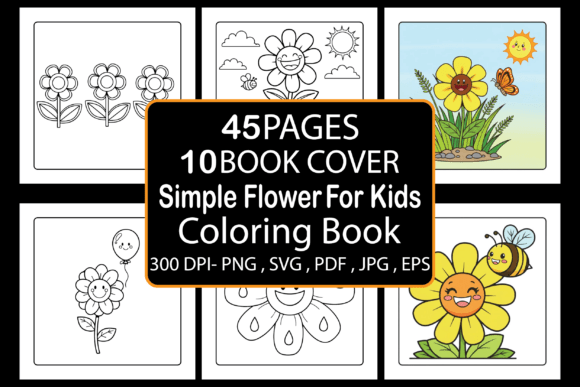
At its core, this product delivers exactly what the name suggests: simple flower outlines that young children can color without frustration. The 45 illustrations are intentionally uncomplicated, avoiding the intricate details found in adult coloring books or even in many children’s coloring books that try to appeal to a wide age range. Each flower is presented in black and white on an 8.5 x 8.5 inch page with bleed, so you get a clean, printable format that works well with standard home printers or professional print-on-demand services.
What sets this collection apart is its single-minded focus on flowers. Unlike mixed-topic coloring books that include animals, vehicles, or fantasy scenes, this book sticks to one theme. For a preschooler or kindergartner who loves flowers, that consistency can be appealing. For a parent or educator building a nature-themed unit, having 45 different flower designs means you can offer variety within a single subject, reinforcing vocabulary and observation skills without overwhelming the child.
The package also includes 45 JPG, PNG, EPS, and SVG files, which gives you flexibility beyond simple printing. You can resize individual images, incorporate them into worksheets, create digital coloring activities for tablets, or use them in craft projects. The inclusion of 10 book cover backgrounds is a practical bonus for anyone planning to repackage the content for commercial use, such as creating a unique cover for an Amazon KDP listing.
Comparing Simple Flower for Kids Coloring Book with Other Options
When evaluating any coloring book resource, it helps to consider the broader landscape of what’s available. Children’s coloring books generally fall into a few categories: themed collections, mixed-topic books, licensed character books, and educational coloring books that incorporate letters, numbers, or simple puzzles. The Simple Flower for Kids Coloring Book sits firmly in the themed collection category, and that positioning brings both advantages and tradeoffs.
Themed vs. Mixed-Topic Coloring Books
A mixed-topic coloring book offers variety in every sitting. One page might feature a cat, the next a tree, and the next a train. For children who get bored easily, that variety can hold attention longer. However, for a child who is particularly interested in flowers, or for a parent trying to create a calm, focused activity, a themed book like Simple Flower for Kids Coloring Book can be more effective. The repetition of a familiar subject helps build confidence—each new flower is different enough to be interesting but similar enough that the child knows what to expect.
From a publisher’s perspective, themed books also have clearer positioning. A parent searching for “flower coloring book for kids” is more likely to find this product than a general “kids coloring book” that includes a few flower pages among dozens of other subjects. That search clarity matters on platforms like Amazon, where specific keywords drive discoverability.
Complexity Levels for Different Age Groups
Many children’s coloring books claim to be for “ages 3 to 8,” but that range covers very different skill levels. A three-year-old needs large, simple shapes with thick lines, while a seven-year-old can handle more detail and smaller spaces. The Simple Flower for Kids Coloring Book leans toward the simpler end of that spectrum. The illustrations are bold and uncluttered, making them appropriate for children as young as two or three who are still developing fine motor control. Older children, especially those who enjoy more detailed work, might find these designs too basic after the first few pages.
If you are working with a mixed-age group, you might combine this book with a more detailed flower coloring book intended for older children or adults. That way, younger kids get the simple outlines they need, while older siblings or students can work on more intricate designs alongside them. The Simple Flower for Kids Coloring Book serves as an entry point—a gentle introduction to coloring that builds confidence before moving to more complex materials.
Strengths and Practical Advantages
The strongest argument for choosing this coloring book is its appropriateness for the youngest artists. Very young children often become frustrated when they cannot color within tiny spaces or when the lines are too thin to see clearly. The thick, clear outlines in this collection reduce that frustration and allow the child to focus on the act of coloring itself. That might seem like a small detail, but anyone who has watched a toddler give up on a coloring page because the lines were too fine knows how much it matters.
Another practical strength is the file format flexibility. The PDF is ready to upload directly to Amazon KDP, which is helpful if you plan to sell printed copies. But the additional JPG, PNG, EPS, and SVG files mean you are not locked into one use case. You can print individual pages for a single child, create a bound booklet, or use the digital files in a classroom setting where you project images onto a screen for group coloring activities. The EPS and SVG formats are particularly useful for designers who want to modify the illustrations, change sizes, or incorporate them into other projects.
The 10 included cover backgrounds also simplify the process of creating a professional-looking product. For someone new to self-publishing, designing a cover that meets Amazon’s requirements and attracts buyers can be surprisingly challenging. Having ready-made backgrounds gives you a starting point, and you can add your own title, author name, and branding without starting from scratch.
Limitations and Situations Where Other Options May Work Better
No single resource fits every situation, and the Simple Flower for Kids Coloring Book has limitations worth considering. If you are looking for a coloring book that also teaches letters, numbers, or spelling, this is not the right choice. The focus is purely on flower illustrations, with no educational prompts or activities included. For a parent who wants a coloring book that doubles as a learning tool, a product that combines simple drawings with tracing words or counting exercises would serve that purpose better.
Another consideration is age range ceiling. As noted, children around age six or seven may begin to find the designs too simple. If you are purchasing for a single child who is already comfortable with coloring and looking for more challenge, you might be better served by a nature-themed coloring book with greater detail, or even a beginner’s floral drawing book that encourages the child to create their own flower shapes.
For educators, the single-subject focus is either a strength or a limitation depending on your goals. If you are running a garden or plant unit, this book is ideal. If you need a general-purpose coloring activity for free time or indoor recess, a mixed-topic book offers more variety and keeps children engaged longer across multiple sessions.
Publishers should also consider the competitive landscape. There are many flower-themed coloring books on Amazon, and standing out requires more than just good interior pages. The cover, title, and keywords matter enormously. The included cover backgrounds help, but you will still need to invest time in creating a compelling listing, gathering reviews, and optimizing your product page. The simple, clean interior of this book appeals to a specific niche—parents of very young children and teachers of preschool or kindergarten—and marketing it effectively requires reaching that audience directly.
Decision Factors: When to Choose Simple Flower for Kids Coloring Book
If you are a parent with a child aged two to five who shows interest in flowers and enjoys coloring, this book is a straightforward choice. The 45 pages provide enough variety to last through many sessions, and the simple lines will not frustrate a beginner. The digital format means you can print pages as needed, so even if the child colors only part of a page one day, you can offer a fresh one the next without wasting a whole book.
If you are an educator planning a nature-themed curriculum for preschool or kindergarten, this book gives you a clean, reproducible resource. You can print pages for each student, use the SVG or EPS files to create larger posters for classroom decoration, or incorporate the images into worksheets and handouts. The consistent theme supports vocabulary building around flower types, colors, and parts of a plant.
If you are a self-publisher or content creator exploring the KDP or print-on-demand market, the Simple Flower for Kids Coloring Book offers a low-barrier entry point. The interior is ready to upload, the file formats give you flexibility, and the niche is clear. Whether you create one listing or use the files across multiple products with different covers, the content is clean and marketable. However, you should evaluate whether the simple style matches the audience you want to reach. If your target customers prefer more detailed or educational content, you may need to supplement this book with additional resources or choose a different product altogether.
Comparing Digital Printable vs. Pre-Printed Coloring Books
The digital printable format is worth discussing on its own terms. Unlike a traditional physical coloring book that you buy once and use page by page, a digital printable gives you control over how and when you print. For parents, that means you can print the same page multiple times if the child wants to redo it, or you can print only the pages your child is interested in. For teachers, it means you can print exactly as many copies as you need without worrying about binding or page order.
The tradeoff is that you need access to a printer, paper, and ink or toner. For a family that prints frequently, that is not a significant barrier. For someone who prefers the convenience of a ready-made bound book, a physical coloring book may be simpler. The Simple Flower for Kids Coloring Book works well in both contexts because you can print and bind it yourself, or you can upload it directly to KDP and have Amazon handle printing and shipping.
Practical Tips for Getting the Most Out of This Resource
If you decide to use the Simple Flower for Kids Coloring Book, here are a few practical ideas that may help you get the most value from the 45 designs:
- Print on different paper types. Use standard copier paper for everyday coloring, but consider heavier cardstock for pages you want to display or paint on with watercolors.
- Combine with other simple activities. Let the child color the flower, then cut it out and glue it onto a larger scene. The simple outlines make cutting easy for small hands.
- Use the digital files for tablet coloring. Load the PNG files into a drawing app so the child can color on a tablet. This works well for travel or when you want to save paper.
- Create a matching game. Print two copies of each page, color them differently, and use them to play a matching or memory game.
- Build a flower vocabulary. Name each flower type as the child colors it. Even if the flowers are stylized, you can use real flower names to support language development.
For publishers, the key to success with this product lies in presentation. The interior is solid, but the cover and product description will determine how many people click through. Use the included cover backgrounds as a base, but consider adding a clear title that speaks directly to your audience—“Simple Flowers for Little Hands” or “My First Flower Coloring Book” may resonate more than a generic title. Emphasize the simplicity and age appropriateness in your description, and consider including sample pages so buyers can see the clean, uncluttered style.
Final Thoughts on Fit and Value
The Simple Flower for Kids Coloring Book fills a clear niche: it offers very young children a low-frustration coloring experience focused on a single, appealing theme. It is not designed to challenge older children, teach academic skills, or provide complex artistic patterns. Within its intended use case, it performs well and gives parents, teachers, and publishers a reliable resource.
If you are comparing this book with other options, think first about the age and skill level of the child who will be using it, then about whether the single-theme format matches your needs. For a preschooler who loves flowers and is still building fine motor skills, this is a strong choice. For an older child or a classroom needing more varied content, you may want to look further or combine this book with other resources.
The digital printable format adds flexibility that physical coloring books cannot offer, and the inclusion of multiple file types makes this product more than just a simple PDF. Whether you are coloring with your own child, planning classroom activities, or building a small publishing business, the Simple Flower for Kids Coloring Book provides a practical, focused foundation that you can adapt to your specific situation.